
FORGOTTEN FUTURES
THE SCIENTIFIC ROMANCE ROLE PLAYING GAME
RULES SUMMARY
By Marcus L. Rowland
Copyright © 2005, portions Copyright © 1993-2002
Back to game index - Back to main index
By Marcus L. Rowland
Copyright © 2005, portions Copyright © 1993-2002
The first release of these rules was originally converted to HTML by Stefan Matthias Aust, to whom many thanks.
This document should be accompanied by several files including larger versions of the game tables, the full rules, and a version of the full rules split into several separate files for slower machines.
Introduction
Characters And Rules
About This Release
Game Requirements
Game Terms
Character Points
Equipment and Notes, Weapons, etc.
Characteristics
Sample Character Record
Using Characteristics
Skills
Improving The Odds
Using Skills
Temporary Skills
Projects
Role Playing
Improving Skills
Wounds
Adding Skills
Free Skills
Skill list
Medical Skills, Recovery, & Death
Combat
Combat Round
Resolving attacks
Armour
Weapons
Non-combat injuries
SourcesIntroduction
 THIS is a BRIEF synopsis of the Forgotten Futures rules for the use of players. Referees are STRONGLY advised to check out the full rules, which contain considerably more information.
What will the future be like? Every generation has its own set of ideas and predictions. At the turn of this century most pundits thought that the mighty power of steam and electricity would usher in a new age of peace and prosperity. In the fifties the future was mostly seen as doom, gloom, and nuclear destruction. In the nineties we are obsessed with computers, and convinced that the future will revolve around information technology. Each of the earlier views was valid for its era; each was at least partially wrong. By looking at earlier guesses we may be able to discover what is wrong with our own vision of the future - and make even worse mistakes when we try to correct it!
Forgotten Futures is a role playing game based on these discarded possibilities; the futures that could never have been, and the pasts that might have led to them, as they were imagined by the authors of the late nineteenth and early twentieth century.
| About This Release
Since the game was originally published as shareware in 1993 there have been ten on-line releases, printed versions from two publishers, and conversions to pdf and html format. In all this the actual rules have stayed much the same. This release isn't going to change that; it's mainly tidying things up a little, adding in material originally written for one or another of the game settings which seems more generally useful, fixing some errors, improving layout, and generally making things more user-friendly. Most of the new material is in the full rules, but a few changes appear elsewhere. Where it's important the change is pointed out, one way or another. But you can still use any version of the rules to run anything written for the game. |
| 1D6 | Roll one dice (one die if you feel pedantic) |
| 2D6 | Roll two dice and add the numbers |
| BODY | A characteristic, often abbreviated as B. |
| MIND | A characteristic, often abbreviated as M. |
| SOUL | A characteristic, often abbreviated as S. |
| Effect | Numerical rating used to calculate the damage caused by weapons and other forms of attack. |
| Average of.. | Add two numbers (eg characteristics) and divide by two. Round UP if the result is a fraction. Usually abbreviated as Av, e.g.AvB&S |
| Half of.. | Divide a number (usually a characteristic) by two and round UP. Usually shown as /2, e.g.B/2, 1D6/2 |
| Some skills are based on half the average of two characteristics. Add the characteristics, then divide by 4, then round up. e.g.AvB&S/2 | |
| +1 | Add 1 to a dice roll or other number. |
| +2 | Add 2 to a dice roll or other number. |
| -1 | Subtract 1 from a dice roll or other number. |
| -2 | Subtract 2 from a dice roll or other number. |
| 2+, 3+, etc. | 2 or more, 3 or more, etc. |
| Round | A flexible period of time during which all PCs and NPCs can perform actions. In combat a round is a few seconds, in other situations it might be a few minutes or hours. |
| Optional Rule | This means exactly what it sounds like; something that can be tacked onto the game if you want to use it, but isn't essential for play. Usually optional rules add extra realism, but make life harder for players or the referee, or involve complexities which you may wish to avoid. Most of the appendices are optional rules. |
| FF | Forgotten Futures (what else?) |
| Forgotten Futures I, II, etc. |
| |||||||||||||||||||||||||||||
Each player will need at least one character, whose details should be recorded. You can use the HTML record form provided, one of the rather pretty .pdf record forms that were originally part of the printed version of the game, a spreadsheet template, or just write everything down on scrap paper. The example to the right shows the format that's generally used.
Players should record their names and the name (including any title or rank), sex, and age of the character. They may wish to give their characters aristocratic or military names and rank, academic honours, and the like; the referee must decide if this will cause problems.
Age, sex (male or female, and [optionally] sexual orientation) may be important in some game settings. For "profession", write in something appropriate to the game setting; the referee should tell players if they have made unsuitable choices.
The next sections of the record are completed using character points.
| ||||||||||||||||||||||||
BODY (B) covers physical strength, toughness, speed, and dexterity.
MIND (M) covers all intellectual capabilities, reasoning, and observation.
SOUL (S) covers emotions, charisma, and psychic ability.
In some campaigns a fourth characteristic, MAGIC, may also be in use; details are in the full rules. See below for full details of the effect of the three main characteristics.
|
Skills are based on one or more characteristics, to which at least one point must be added. For instance, Actor is based on the average of MIND and SOUL, plus at least one point. A character with MIND [3] and SOUL [3] would get Actor [4] for one point, Actor [5] for 2 points, or Actor [6] for 3 points.
Brawling and Stealth are available at the values shown without spending points on them. Naturally they can be improved if points are spent.
See later sections for full details of the purchasing system and use of skills, and a more detailed explanation of each skill.
The weapons section is used to record weapons that the character routinely carries. The columns list the weapon's name, whether it is capable of multiple attacks, the Effect number which determines how much damage it can cause, and the results of any damage caused. For now it isn't necessary to worry about the use of this system; it's explained in the section on combat below. Weapons are listed in section.
The section marked "Wounds" is left blank for use during play. Note that this is the wound chart for humans and animals of roughly human size and toughness; some animals use different charts.
The weapons section is used to record weapons that the character routinely carries. The columns list the weapon's name, whether it is capable of multiple attacks, the Effect number which determines how much damage it can cause, and the results of any damage caused. For now it isn't necessary to worry about the use of this system; it's explained in the section on combat below. Weapons are also listed below.
BODY represents general physique, well-being, stamina, and speed. If characters expect to spend a lot of time in combat, or performing manual labour, BODY should be high. Inanimate objects also have BODY. BODY is NOT necessarily indicative of size or weight; it's possible for something to be physically small or light and still have high BODY (e.g. a bantam weight boxer, a steel key), or big and have low BODY (e.g. a fat invalid, a greenhouse).
MIND covers all mental skills and traits including intelligence, reasoning ability, common sense, and the like. Anyone in a skilled job probably needs high MIND. MIND is also important in the use of most weapons.
SOUL covers artistic abilities, empathy, luck, and spiritual well-being. If SOUL is low the character should be played as aloof, insensitive, and unlikeable (as in the phrase "This man has no soul"); if high, the character does well in these areas. It is also used for other forms of human interaction, such as fast-talking, acting ("A very soulful performance"), and other arts (including martial arts). If your SOUL is low better not try to con anyone, and forget about learning baritsu or karate.
Normal human characteristics are in the range 1-6, with 1 exceptionally poor, 3 or 4 average, and 6 very good, the top percentile of normal human performance. Player characters may have characteristics of 7 at the discretion of the referee ONLY; this is freakishly good, far better than normal human performance. For example, a gold-medal Olympic athlete might have BODY [7], a Nobel Prize winner MIND [7].
Characteristics cannot normally be improved; they may sometimes be reduced as the result of crippling injury.
Depending on circumstances, characteristics may be used against other characteristics, against skills, or against an arbitrary "Difficulty". Skills give an edge in most of these situations, as explained in later sections, but it's occasionally necessary to use them directly. For this, and for all other use of characteristics and skills, roll 2D6 on the table below:
| |||||||||||||||||||||||||||||||||||||||||||||||||||||||||||||||||||||||||||||||||||||||||||||||||||||||||||||||||||||||||||||||||||||||||||||||||||||||||||||||||||||||||||||||||||||||||||||||||||||||||||||||||||||||||||||||||||
If the result is below 12 and less than or equal to the number indicated on the table, the attempt succeeds. A dash (-) indicates that there is NO chance of success, otherwise 2 is ALWAYS a success and 12 is ALWAYS a failure.
If you prefer to do without the table a little mental arithmetic can be used as follows:
To do anything roll 2D6:
|
Depending on circumstances, characteristics may be used against other characteristics, against skills, or against an arbitrary "difficulty number". Skills give an edge in most of these situations, as explained in later sections.
Raw BODY is mostly used for feats of strength, endurance, and dexterity which are not covered by other skills. For example, to dodge a thrown bottle you might have to use your BODY against the skill of the thrower.
Raw MIND is generally used to notice things (such as partially hidden objects), to have bright ideas, and to solve puzzles (if they aren't solvable by the player).
Raw SOUL is used mainly for luck and intuition ("I've got a bad feeling about this..."), also as a measure of personality and charm.
This system isn't perfect. For example, a man with BODY [3] theoretically has a 1 in 36 chance of lifting a BODY [10] elephant; in practice the referee may make this task much harder.
At the discretion of the referee ONLY players may spend bonus points to temporarily modify an attacking or defending value as appropriate. Players must declare that they are doing this, and mark off the point(s) used, before the dice are rolled.
This rule does NOT mean that you can spend points to perform the physically impossible. No matter how many points are spent, a BODY [1] weakling will not lift an elephant single-handed. Regardless of points spent, a 12 is still a failure.
Skills are initially calculated from one or more characteristics, with the number of points spent added to the result. For instance, Marksman (the use of all forms of hand-held firearm and other hand-held projectile weapons) is based on MIND. Acting is based on an average of MIND and SOUL. Skills may be raised to a maximum value of 10.
Characters automatically have two skills at their basic values without spending points: Brawling and Stealth. Naturally points can be spent to improve them.
Bonus points can usually be spent to improve skill rolls, exactly as they are used to improve characteristic rolls.
Bonus points may not be used to help in this situation.
To try to improve a skill use the relevant characteristic(s) to attack the current skill rating:
Characters with the Linguist skill may add extra languages by practice during the campaign, or by spending one or more Bonus points per extra language for training between adventures (most will cost one point, something particularly obscure will cost more). Only one language may be added per adventure. Improving the Linguist skill itself costs the new value of the skill, e.g. 5 bonus points to raise Linguist [4] to Linguist [5], as above.
Characters with the Scholar skill may only add new areas of knowledge by improving the skill.
The referee will decide if a new skill is appropriate for the character. The new skill is acquired at its lowest possible value.
An attempt to add a new skill costs DOUBLE its rating; eg, an attempt to add a skill with rating 5 costs 10 bonus points. This represents the considerable investment in time and money needed to learn a completely new skill.
To try to acquire a new skill use the relevant characteristic(s) against the first rating the skill will have:
The referee may make things easier for players if a new skill is a natural result of events in the game.
B = BODY, M = MIND, S = SOUL, Av = Average, / = Divided byFor example:
Skills marked with an asterisk are automatically acquired at their basic values.
AvM&S = average of MIND and SOUL (round up) M/2 = MIND divided by 2 (round UP) AvB&S/2 = average of BODY and SOUL divided by 2 (round UP)
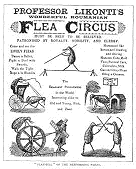 Any form of stage performance. If more than one point is spent you are good enough to earn money from one specialised type of performance, such as Operatic Tenor, Conjuror, Ballerina. This skill is also useful for confidence tricks. E.g. Actor (Juggler)
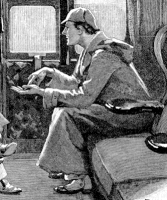 Trained in the art of observation; good at spotting small details, noticing faint scents, little clues, unusual behaviour, etc. Can be used as an improvement over normal observation rolls, and sometimes in place of an Idea roll, or in place of the Psychology skill. Specialities might include forensics, interrogation, etc. E.g. Detective (Bertillon identification system)
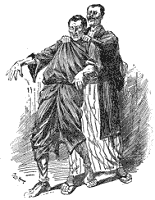 Use for any Oriental martial art, also for Savate, quarterstaff combat, etc. See the combat rules below. Allows multiple hand-to-hand and melee weapon attacks in a single combat round, and can increase the Effect number of some attacks. E.g. Martial Arts (Ju-Jitsu)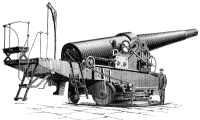
Wounds B[ ] F[ ] I[ ] I[ ] C[ ] |
|
The table shows the effects of wounds. Temporarily reduce the value of BODY and BODY-related skills by the value shown, but not below a minimum of 1.
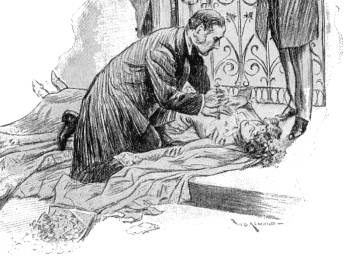 First Aid stabilises wounds and prevent them getting worse. On a successful roll against the recovery Difficulty of the wound, there is no possibility of deterioration. For example, this might involve splinting a broken leg, disinfecting and bandaging a wound, or putting cold tea (a common Victorian remedy) or ice onto a burn. Multiple wounds must be treated separately; for instance, someone with a Flesh Wound and an Injury, or with two Injuries, would need each treated separately.
Without first aid the wound may eventually deteriorate; roll the recovery Difficulty against the patient's BODY, if the result is a success the wound will get worse. Flesh wounds become Injuries and Injuries become Critical (usually as fevers and illnesses such as gangrene) if they get worse.
The Doctor skill acts like First Aid, and also speeds healing. If a successful roll is made recovery time is halved. Since the Doctor skill usually begins at a lower level than First Aid, devoted healers may wish to take both skills.
To recover from wounds without medical help, roll BODY against the recovery difficulty - AFTER the minimum recovery period. If the result is a success, the wound is healed. If the result is a failure, the illness drags on for another period before the roll can be made again.
Death is death, and is usually permanent. In some settings there may be some rationale for reanimation or resurrection, but in most games there is no recovery. The referee should explain if this applies.
Some examples of common forms of injury follow the combat rules below; they are clearer if you understand some details that are introduced in the combat rules.
 The combat rules take up a large chunk of this file; this does NOT mean that they are the most important aspect of the game - it just means that they are a little more complicated than other sections. DON'T make the mistake of thinking that every adventure must involve several fire-fights!
These rules borrow an idea that is found in some war games. All the events in a combat round occur simultaneously. If ten people are firing guns, all of them fire BEFORE the results are assessed. You can shoot a gun out of someone's hand, but he will have a chance to shoot you before he loses it. Attacks are usually a use of skill against a defence; if the attack penetrates the defence, the damage is determined by use of the attack's Effect against the BODY of the target. All of these concepts are explained in more detail below.
The following things can be done in a combat round
Anyone taken completely by surprise CANNOT fight, move, or dodge in the first round of combat, but CAN perform a simple action. For example, intruders would have a round to attack someone who was standing a few feet from an alarm button; he would not have time to get to it first. They could not stop him pressing the button if he already had his hand on it. By definition, someone with a weapon in his hand pointed at an attacker is NOT taken by surprise!
|
One modifier may need explaining, since it is frequently misunderstood; machine guns are a little less accurate than other firearms, but more than make up for it by firing LOTS of bullets, increasing the chance of a hit over that for a normal gun. This is the main reason why automatic weapons are used. The idea that machine guns rarely hit and do less damage than other firearms is a myth. Even when used for single shots they are no less accurate than other weapons of similar size.
Some attacks can be used via two or more skills; for example, a longbow might be used via the Marksman or Martial Arts skill, a club via the Brawling or Melee Weapons skill. Use whichever skill is best. If all else fails weapons may be used via characteristic rolls; these are usually poorer than skills.
Defences may also be based on skills or characteristics; for example, someone might try to avoid an arrow by ducking (BODY versus the attacking skill), by hiding (Stealth skill), or by use of the Martial Arts skill to catch it! If no better skill is available, the basic defending value is 6.
If the result of any attack is a success, some damage occurs. Roll for damage as described below.
|
All attacks have an Effect number. For hand-to-hand weapons, martial arts, and other unarmed combat skills it is either the skill level or the user's BODY plus a bonus; for example, a club gains most of its power from the user's strength, and has an Effect equal to the user's BODY +1. A fencing foil, like all swords and daggers, has an Effect equal to Melee Weapon skill. For firearms the Effect number is usually intrinsic to the weapon, and thus independent of the user's skill or BODY.
Damage is determined by using the Effect number to attack the target's BODY. The result of this roll will sometimes be a failure; this is interpreted as minimal damage for the weapon, from column A of the weapons table. While this is always preferable (for the victim!), many weapons have a flesh wound or worse as their minimal damage.
If the result is a success, but more than half of the result needed for a success, check column B of the weapon table.
If the result is a success, and the dice roll is less than or equal to half the result needed for a success (round DOWN), check column C of the weapon table. If in doubt, use the table to the right to calculate which damage column is used.
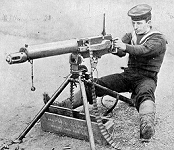 Machine guns use a special rule for Effect. If they are used on more than one target, the Effect is reduced by 2. The attacker must roll separately to hit each target, and to damage the victim if the attack is successful. It's easy to abuse machine guns; players often say that they are trying to shoot at victims in two or three different areas, which should not be allowed. Shooting at several targets in one direction (such as a group of men running along a corridor) is acceptable, but the targets in front will conceal those behind, or at least reduce the Effect. They are powerful weapons, but not all-powerful.
It isn't possible to limit damage with shotguns, machine guns, or area effect weapons such as explosives or flame throwers, or with ANY attack on multiple targets.
|
If it is used, someone who rolls to hit a target without trying to hit a specific area should roll 2D6 for a random hit location as indicated above, and modify the Effect accordingly.
It is not possible to attack a specific hit location with machine guns or area effect weapons such as grenades, or while performing any form of multiple attack. Damage from these weapons should attack random hit locations.
| Armour | Effect | Notes |
| Bulletproof vest | -4 | projectile and blade attacks |
| Kevlar Body Armour | -6 | projectile and blade attacks |
| Bullet Proof Glass | -4 | projectile attacks |
| Medieval Plate Mail | -4 | melee weapon attacks |
| Medieval Chain Mail | -2 | melee weapon attacks |
| Motorbike Leathers | -2 | impact weapons (eg clubs) |
| WW1 Steel Helmet | -3 | attacks to head ONLY |
| Crash Helmet | -2 | impact damage to head ONLY |
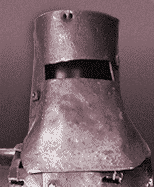 Armour isn't often worn in the stories on which this game is based, but may occasionally become important. It can reduce the Effect of weapons, but doesn't modify the roll to hit; in fact, someone wearing heavy armour should theoretically be slower and easier to hit.
The list to the right includes some modern armour as well as equipment that might be available in the late 19th century. The level of protection depends on the type of armour. Naturally only the area covered by the armour is protected; for example, motorbike leathers cover the torso, arms, and legs, but don't protect the head. A full-face crash helmet protects the head only. Similarly, body armour doesn't protect limbs or the head.
| ||||||||||||||
Some of the weapons shown have very high effect numbers, which go well off the "attack versus defence" table. This usually indicates an attack which will do maximum damage unless a 12 is rolled, or the effect number is somehow reduced; for example by distance (e.g. explosives), by the damage being spread to cover several targets (mini gun), or by armour.
Note that most unarmed attacks and some weapon attacks don't show death as a possible outcome; it simply isn't very likely in the course of a fast-moving fight. Referees should feel free to ignore the suggested result in unusual conditions; for example, if someone is attacked by a mob, while unable to resist, or is completely outmatched by his attacker.
Melee Weapons
Effect is based on BODY or skill.Weapon Multiple
TargetsEffect Damage Notes A B C Fist No [1] BODY [2] B B KO See above Kick No [1] BODY [2] B B F See above Wrestling No BODY [2] B KO KO / I See above Animal Bite No BODY+2 F I C See above Animal Claw No BODY+1 F I C See above Animal Horns No BODY+2 F I C/K See above [1] Using the Martial Arts skill it is possible to perform one fist and one kick attack in a single round against one target, or against two targets that are close together. Against two targets the attacks are at -2 Effect. [2] Users of the Martial Arts skill can use BODY or Martial Arts for Effect in these attacks, whichever is better.
Club Max 2 [3] BODY+1 F F KO/K Eg. Cricket Bat Spear No Melee F I C/K e.g. bayonet on rifle. Axe No BODY+2 F I C/K Sword Max 2 [3] Melee+1 F I C/K Dagger No Melee+1 F I I/K Eg. flick knife Whip No Melee/2 B B F Chair No Brawling B F I/KO Broken bottle No Brawling+1 F F I Nunchuks Max 2 [3] M. Arts B F KO/K Martial arts skill ONLY Staff Max 3 [3] Melee+2 F I KO/C [3] Targets must be within 5ft. Multiple attacks are at -2 Effect. Multiple attacks are available with the Martial Artist skill ONLY. Range For all melee weapons, targets are TOO CLOSE if they block effective use of the weapon; within a couple of feet for swords and axes, within 6 ft for whips (a lousy weapon, despite Indiana Jones), and so forth. If unsure, give players the benefit of the doubt.
Projectile Weapons
Effect is usually based on skill (for thrown weapons), on BODY (for longbows and thrown axes), or on the weapon rather than the user for firearms etc.Weapon Multiple
TargetsEffect Damage Notes A B C Spear No Melee F I C/K Thrown Axe No BODY+1 F I C/K Thrown Dagger No BODY+1 F I C/K Thrown Shuriken Max 3 M.Arts ONLY B F F Thrown Boomerang No Marksman B F KO/I Thrown Cricket Ball No Marksman B F KO/I Thrown Longbow No [4] BODY+1 F I C/K Hunting bow Crossbow No 7 F I C/K Military bow [4] Maximum 2 targets if attacking with Martial Arts skill. Small handgun Max 2 [5] 6 F I C/K e.g. .22 revolver Big handgun Max 2 [5] 6 I I C/K e.g. .38 revolver Huge handgun Max 2 [5] 8 I I C/K e.g. .45 revolver Small rifle No 5 F I C/K e.g. .22 rifle Big rifle No 7 F I C/K e.g. Winchester Huge rifle No 9 I C K e.g. Elephant gun. Small Shotgun Max 2 [5] 4 F I I One barrel Small Shotgun No [5] 8* / 4
* short range ONLYI I C Both barrels Large Shotgun Max 2 [5] 7 F I C/K One barrel Large Shotgun No [5] 14* / 7
* Short range ONLYI C K Both barrels Machine pistol Yes [6] 7 F I C/K e.g. Schmeisser Submachine gun Yes [6] 9 F I C/K e.g. Tommy Gun Machine gun Yes [6] 11 F I C/K e.g. Gatling / Maxim Gun Harpoon No 15 I C C/K Non-explosive whaling Harpoon No 25 C C K Explosive whaling [5] Hand guns can be used to fire at two targets, or twice at one target. If firing at two separate targets each attack is at -2 to hit. If firing two shots at one target there is no modifier. Each attack is resolved separately. Shotguns can fire twice at one target (no modifier to hit, small effect), fire at two different targets (modifier -2 to hit, small effect), or fire both barrels at once (+1 modifier to hit, big effect at SHORT range ONLY). In all but the last case the two shots are resolved separately. The doubled Effect of firing two barrels simultaneously is felt at short range ONLY! [6] Reduce Effect by 2 if fired at additional targets Ammunition As a rule of thumb assume six shots for all rifles and handguns, and three bursts or twenty single shots for machine guns. The referee should say if more detail is required. Gatling guns (including chain guns, rotary cannon, and mini-guns) cannot fire single shots, but the referee may allow many more bursts to be fired. Range Normal range for all hand-thrown weapons, handguns, machine pistols, and submachine guns is 10-20 ft; normal range for bows, rifles, machine guns, and mini guns is 50-100 ft. Anything closer is at short range, anything further away at long range. Targets are too close if they are closer than the end of the weapon!
Area Effect Weapons
All explosives damage everything at full effect inside the radius shown, at effect -1D6 to double that radius, at effect -2D6 to three times the radius, and so forth. The effect of these weapons is not reduced if there are multiple targets.Weapon Damage
RadiusEffect Damage Notes A B C Stun Grenade 6 ft 8 B KO I+KO Hand Grenade 10ft 10 F I C/K Dynamite 10ft 10 F I C/K +2 Effect per additional stick. Mortar Shell 10ft 12 I C K Howitzer Shell 10ft 15 I C K Anti-tank mine 10ft 20 I C K Car Bomb 20ft 15 I C K Truck Bomb 20ft 20 I C K Flame Thrower 10ft 10 I C K No damage outside 20ft radius.
Exotic Weapons
Things that might conceivably come into play in a campaign, in no specific order.Weapon Multiple
TargetsEffect Damage Notes A B C Radium gun No 8 F I C/K Burrough's Mars Disintegrator Yes [6] 15 I C K Most SF Mini gun Yes [6] 8 I C K Terminator II Weapon Damage
RadiusEffect Damage Notes A B C Stun Gun 3ft 8 B KO KO Most SF Heat Ray 75ft 30 C K K War of the Worlds Black Smoke 500yd 10 C K K War of the Worlds Hydrogen Bomb 1 mile 40 C K K Not recommended!
| ||||||||||||||||||||||||||||||||||||||||||||||||||||||||||||||||||||||||||||||||||||||||||||||||||||||||||||||||||||||||||||||||||||||||||||||||||||||||||||
SO far these rules have said a lot about rolling dice, but little about the real meat of a role playing game; the opportunity to take on a completely different personality in a world of the imagination. Since most scientific romances were written by Victorians and Edwardians, characters have a tendency to fall into stereotyped behaviour which isn't necessarily changed if they are set in the future. Here are a few of the principal elements of this behaviour:
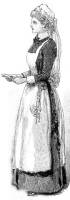
People in inferior positions accept that they are underlings. They are happy to be employed; the idea of bettering their position, over and above promotion within their workplace, is somehow abhorrent. This attitude is especially prevalent amongst servants and others in intimate contact with their social "superiors". For examples see the roles played by Eric Sykes in "Monte Carlo Or Bust", Peter Falk in "The Great Race", and Gordon Jackson in "Upstairs, Downstairs".
In contradiction to the above, the Protestant Work Ethic is also very popular. This says that if you work hard, study, and save money you'll eventually reach the top. This is primarily an American ideal, but also very popular with the British middle classes and anyone else who wants to better himself. Unfortunately middle-class Britons know that however successful they may be, they will never be gentlemen...
Aristocrats are the cream of society; stern but caring, almost always wealthy and learned, always polite (especially to women and other inferiors), they are genuinely superior men, and even savages know them as such. Even if an aristocrat goes bad he remains a gentleman; if his crimes are discovered he will commit suicide rather than dishonour his family by standing trial.
Women unfortunately tend to be treated as inferiors, second class citizens who must be protected from physical and moral danger. An adventurous woman is VERY unusual, a cause for sensation and scandal. A woman exerting real authority is almost unheard of, despite the example of Queen Victoria, and suffragettes and other campaigners for women's rights are treated with great suspicion.
Chauvinism, in its original meaning, is rampant. People don't necessarily hate foreigners, but they do treat them as mental and moral inferiors. To quote a satirical treatment of this attitude, from H.M.S. Pinafore: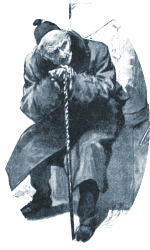
This disrespect for foreigners was true of most nations, especially Britain, while harsh treatment and exploitation of "savages" was typical wherever "civilised" nations were expanding into "primitive" lands; in India and Africa, the Middle East, North and South America, Australia, and the Pacific.
- For he might have been a Roosian,
- A French, or Turk, or Proosian,
Or perhaps Itali-an,- But in spite of all temptations,
- To belong to other nations,
He remains an Englishman!- Hurrah!
- For the true born Englishman!
Some things just aren't done. Chief amongst these is any detailed discussion of sex. Courtship is almost invariably chaperoned, any more intimate contact takes place as in this example:
* * * * *
The next morning there were kippers for breakfast....
Speech is usually fairly formal, and is of course always polite. Accents are stereotyped; in Britain members of the working classes always have lovable Cockney accents, or impenetrable country dialects, while the upper classes all have Oxford accents. Scotsmen say "Och aye", "The noo", and "Hoots mon", Welshmen "Look you" and "Boyo", Irish "Begorrah" and "Saints preserve us". America has its own stereotypes; Harvard accents for the upper classes, Brooklyn for the dregs. Only criminals and drunkards swear.
Finally, here are three examples of good and bad roleplaying in the context of these rules. Can you tell them apart?
"I say, old chap, can you direct me to the station?"
"Yo dude, where do I catch the iron horse?""Excuse me, my Lord, a gentleman from the police is at the door."
"Hey boss, it's the pigs.""I'm afraid we're in a bit of a hurry. May we get by, please?"
"Out of the way, you ***ing scumbags, we're on a mission from God!"
Ten especially useful books, five films, and five comics.